The Algae Sequin Dress
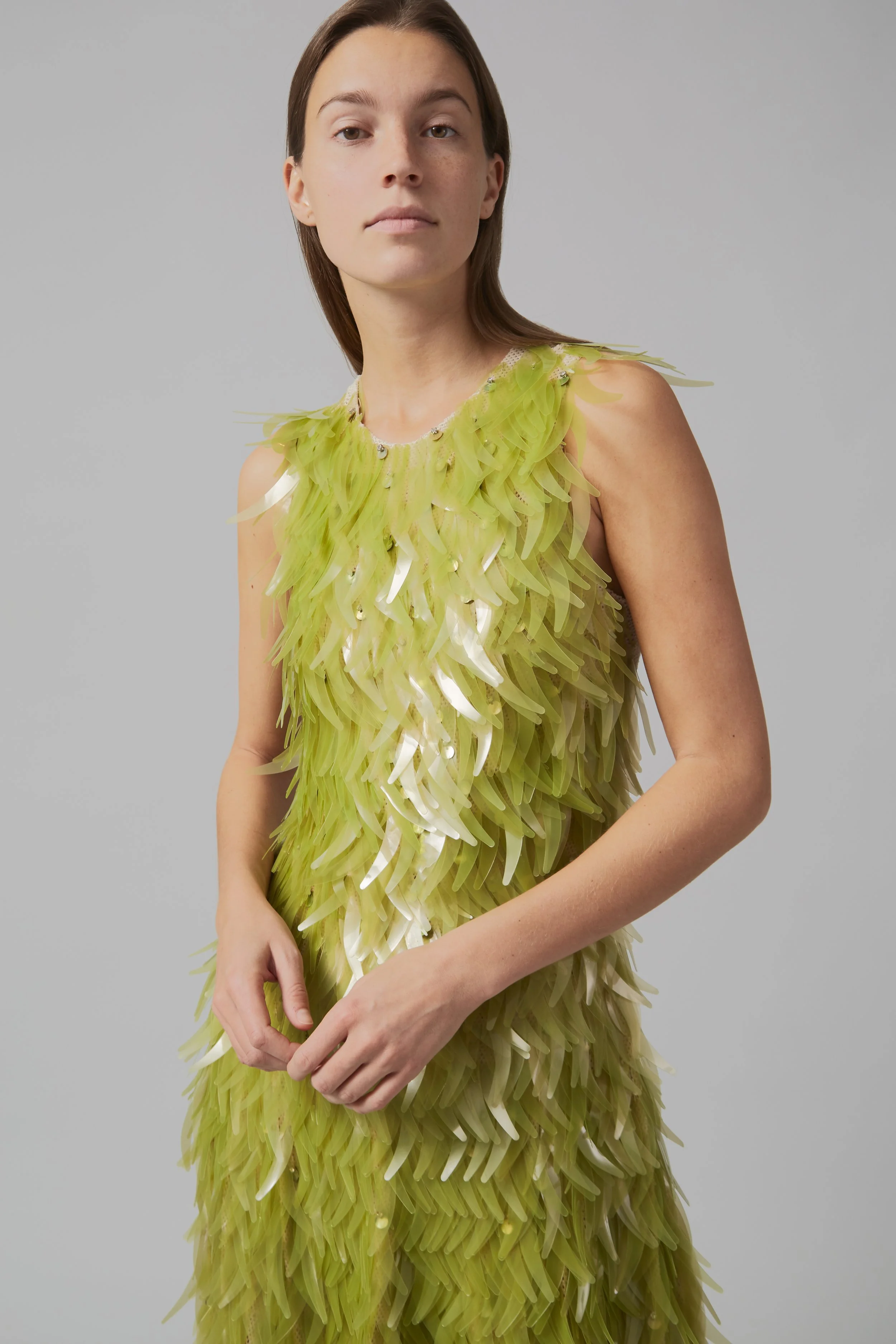
Photo Credit: One X One
A New Vision for Conscious Luxury
Designers: Charlotte McCurdy and Phillip Lim
Year: 2020-2021
Support from: 3.1 Phillip Lim, The OneXOne Initiative, Slow Factory Foundation, UN Office for Partnerships, and Swarovski
This project tested how collaboration, bridging design research methods and established fashion house professional practice, might accelerate the transition from “sustainable” to “regenerative” materials in the apparel industry.
A partnership between designer Phillip Lim and Charlotte McCurdy was initiated by the OneXOne initiative, which connected three sustainability innovators with three fashion brands. This initiative was itself the result of a collaboration between the Slow Factory Foundation, the UN Office for Partnerships, and Swarovski. Building on my prior research in algae-based biopolymers, our project developed the first petrochemical-free sequins derived from algae, colored with non-synthetic pigments, and hand-embroidered into a couture garment. Conducted during the COVID-19 pandemic using distributed studio practices, the collaboration investigated how regenerative design can function within real-world commercial and logistical constraints.
In addition to its technical outcomes, the project reconsiders the role of fashion as a catalyst for industrial revolutions. It posits that, just as textiles once drove mechanization, global trade, and synthetic chemistry, they now serve as a foundation for the emerging bioeconomy. By centering on sequins the work illustrates how luxury can function as a vehicle for behavioral change, transforming aspiration and identity into drivers of climate action. Exhibited internationally and acquired by the Metropolitan Museum of Art (2024), The Algae Sequin Dress demonstrates how regenerative design can leverage fashion’s communicative power to shift public imagination from mitigation toward repair.
-
regenerative fashion; biogenic textiles; petrochemical-free color; algae-based materials; sustainable luxury; circularity critique; textile industrial transitions; aspiration and identity; behavioral adoption; fashion-systems decarbonization.
Background
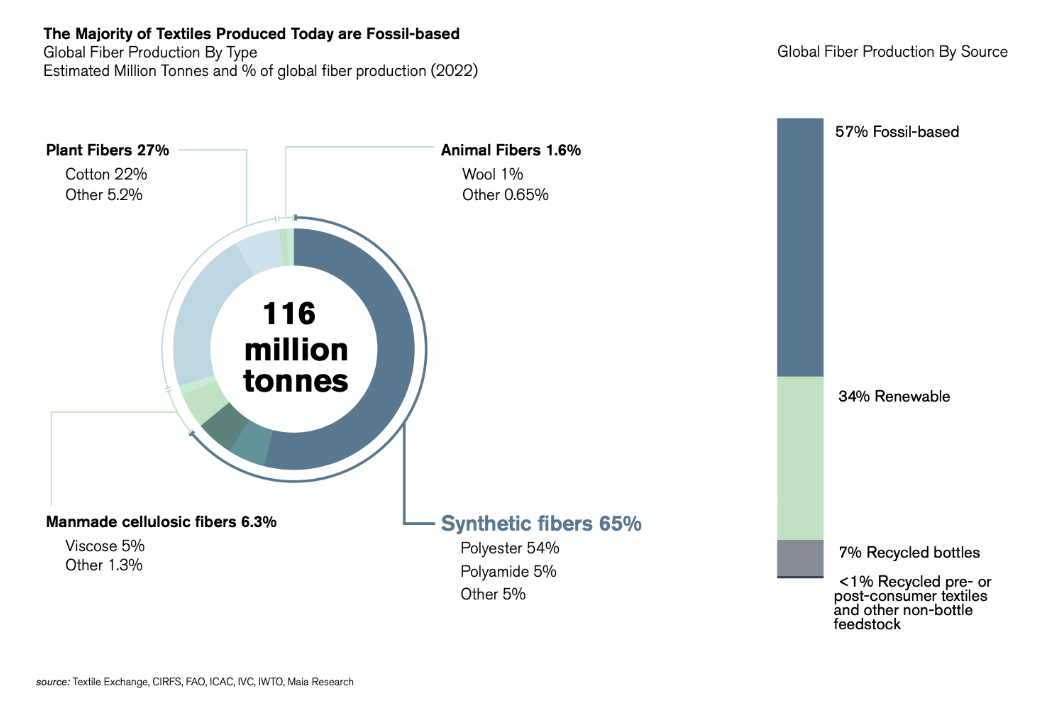
Over the past decade, sustainability discourse in fashion has been dominated by circular economy frameworks: recycled polyester, zero-waste patterning, take-back schemes. In my view, these approaches primarily delay disposal rather than eliminate dependence on fossil feedstocks. Despite significant attention and investment, efforts to increase recycling have not slowed the extraction of virgin resources. Global fiber production has more than doubled since 2000, and more than 60% of fibers now originate from fossil fuels.
I believe this framing misses an essential point. Only 3% of apparel's total greenhouse gas emissions come from end-of-life disposal—the vast majority occurs upstream, in material extraction and production. A regenerative framework, one that actively repairs rather than merely reduces harm, is needed to complement and ultimately replace the maintenance logic of sustainability.
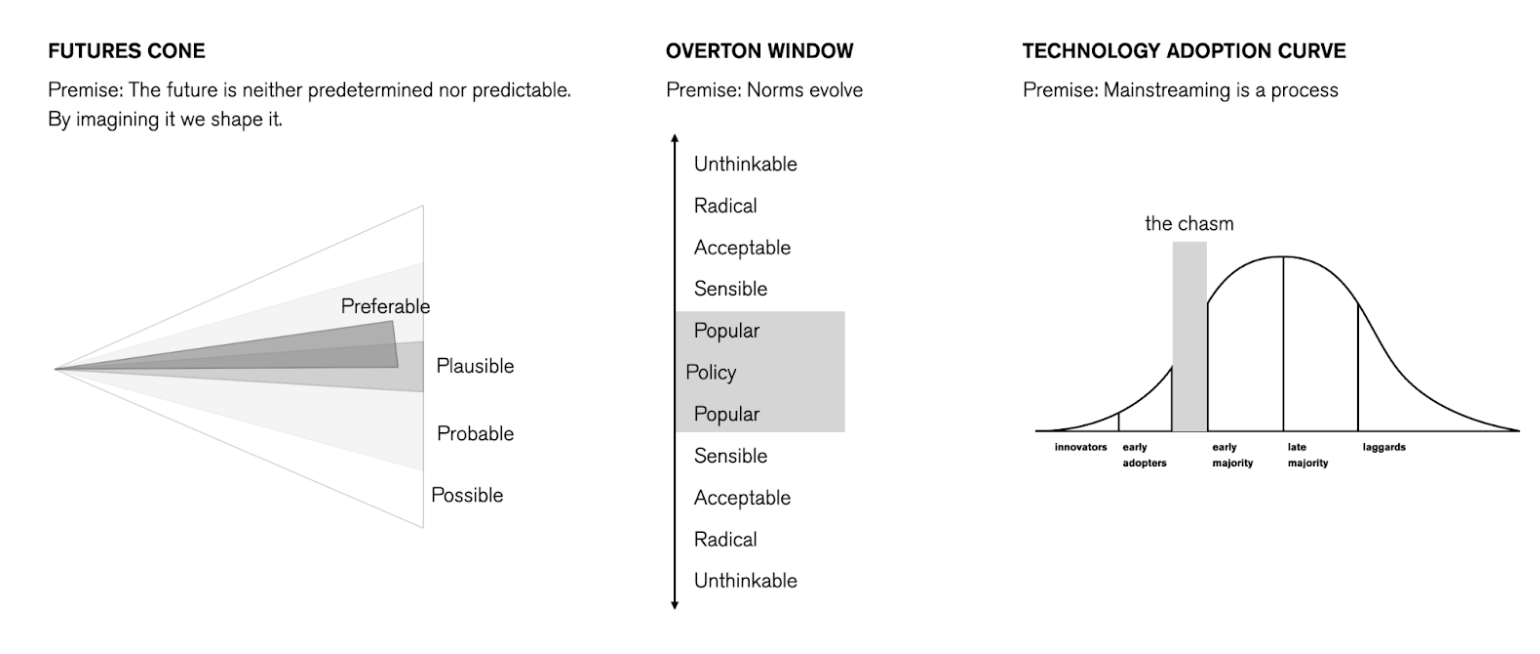
The project tested a hypothesis: that aspiration drives adoption faster than austerity. Electric cars and smartphones became mainstream not through guilt but through desire. The same logic, I argue, applies to fashion. By making regeneration glamorous, we can convert an ecological imperative into something people actually want.
The collaboration produced parallel experiments in petrochemical-free color, testing natural and mineral pigments for optical performance, durability, and material compatibility with couture finishing techniques. The resulting sequins achieved the gloss, chromatic intensity, and flexibility required for high-end application—without PVC, PET, synthetic dyes, or petrochemical additives.
This project challenges the assumption that we can recycle our way out of the problem. It argues that a regenerative framework—one that restores and replenishes ecological systems—is needed to complement and ultimately replace the maintenance logic of sustainability. Regeneration implies net benefit: materials and processes that actively repair rather than merely reduce harm.
From my perspective, the project demonstrates that fashion can function as a laboratory for industrial transformation. Textiles led the first industrial revolution through mechanized spinning and weaving. They kicked off the second through synthetic dyes. I believe they can lead the next one too: a de-industrial revolution grounded in present-tense sunlight, where glamour becomes a vehicle for planetary repair rather than extraction.
Impact
The dress debuted digitally in 2021 and has since been exhibited at the Design Museum London (Waste Age) and the Metropolitan Museum of Art (Sleeping Beauties: Reawakening Fashion, 2024), where it was acquired for the permanent collection—the first piece for both Lim and McCurdy. It reached mainstream audiences through Genesis Motor's national advertising campaigns for their first electric GV70, premiering during March Madness to nearly 10 million viewers per game.
Media coverage spanned Vogue, Harper's Bazaar, WWD, The Guardian, Dezeen, and Fast Company.
One X One: Phillip Lim X Charlotte McCurdy Slow Factory Interview 2020
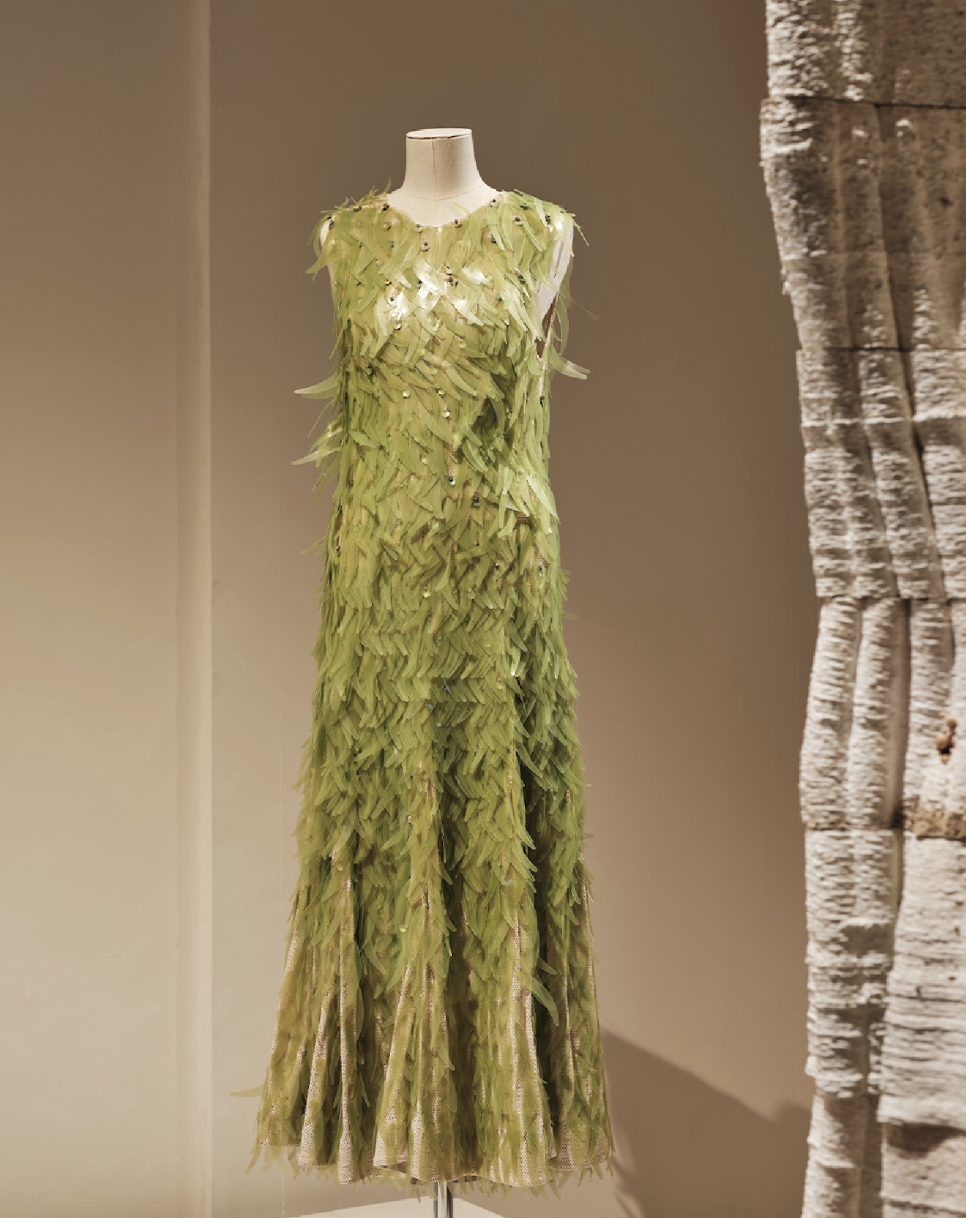
Exhibition view at “Waste Age” at the Design Museum, London
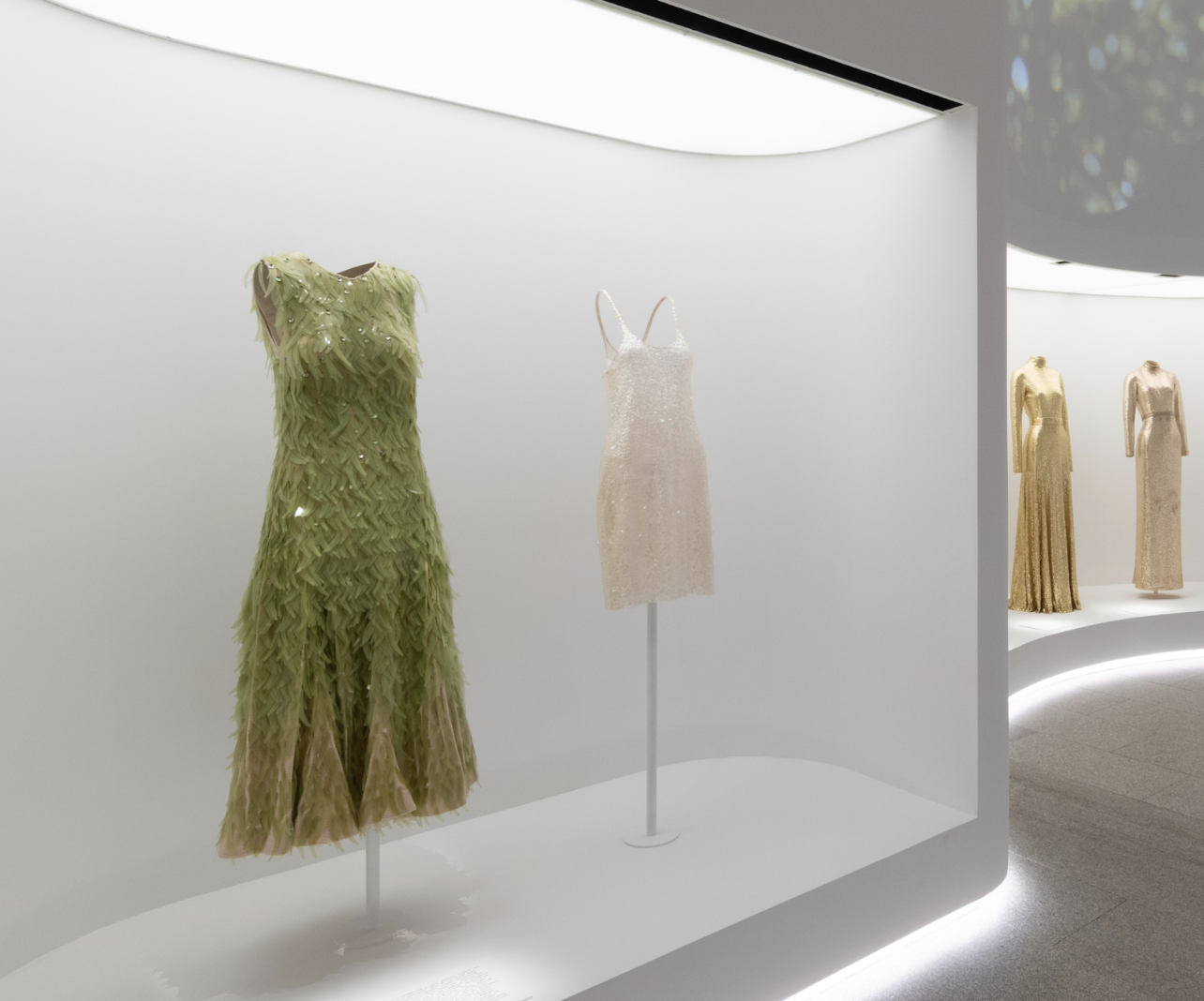
Exhibition view at “Sleeping Beauties” at the 2024 Costume Institute show at the Met
“Chasing Butterflies,” s 2023 national TV campaign to announce the new EV Genesis GV70 featuring sustainability “originators”